

When inquiry learning is malpractice
We know enough to draw some red lines

For the reasonable price of just $5 AUD per month or $50 per year, you can be a full subscriber to Filling the Pail with complete access to my extensive archive on a range of topics, as well as access to the unabridged version of my weekly Curios posts.
There is an ongoing debate about the relative merits of explicit teaching and inquiry learning. One side usually frames this as a false choice, arguing that both methods are useful and valid, usually without specifying what factors a teacher should consider before choosing one method or the other at a particular point in time. I find this argument frustrating and a little disingenuous because below the surface, there is often a clear preference for inquiry learning. For example, in an article about a recent position paper that labels explicit teaching a ‘pedagogy of poverty’, one of the authors of the paper complains about ‘math wars’ and promoters of explicit teaching who do not seek ‘common ground’.
The other side of this debate—to which I belong—argues that inquiry-style activities should only come after a critical mass of knowledge has been taught explicitly. We therefore advocate explicit teaching as the primary strategy for novice learners. What is a novice learner? It is not a student who knows nothing at all; it is simply a student who does not yet know the things the teacher is seeking to teach them. It is worth noting that to make such an assessment, a teacher must therefore have a clear learning objective.
Shifting sands
One of the problems advocates on my side of this debate face is a shifting set of definitions. When I refer to explicit teaching, I mean an entire process that starts with fully explaining concepts and procedures but that ends with students—eventually—creating complex products such as essays or artworks, or tackling challenging mathematics problems.
One reason I use the term ‘explicit teaching’ is that the other common term, ‘direct instruction’, has become so corrupted by different definitions that it has lost meaning. Unfortunately, the same process of erosion seems to now be happening to my preferred term. For example, some commentators appear to believe that explicit teaching refers to any period of teacher explanation or exposition, no matter how short and regardless of whether or not it is interactive. They will then insist that inquiry learning can somehow include explicit teaching. Defined this way, I suppose it could. But then we would need a new term for the practice I am talking about—the one with the evidence-base stretching back at least as far as the process-product research of the 1960s.
Is there a place for inquiry?
There is common ground between inquiry learning and the open-ended and complex tasks that students complete at the end of a sequence of explicit teaching. If we want to label these tasks as ‘inquiry learning’ then this gives us a clear justification for when it should be used: when students have gained relative expertise. This does not mean they have to be PhD students: a Grade 7 student can gain relative expertise in the Eureka Rebellion and at this point, a source analysis could serve to practice, consolidate and apply this learning, even if it probably won’t lead to the student learning anything substantively new.
However, I doubt whether this is what people mean by inquiry learning. I suspect that part of the working definition most advocates are using involves the student learning new concepts from the process rather than from a teacher. Such an interpretation is made explicit on the Australian Federal Government’s education website:
“Inquiry-based learning is an education approach that focuses on investigation and problem-solving. Inquiry-based learning is different from traditional approaches because it reverses the order of learning. Instead of presenting information, or ‘the answer’, up-front, teachers start with a range of scenarios, questions and problems for students to navigate.”
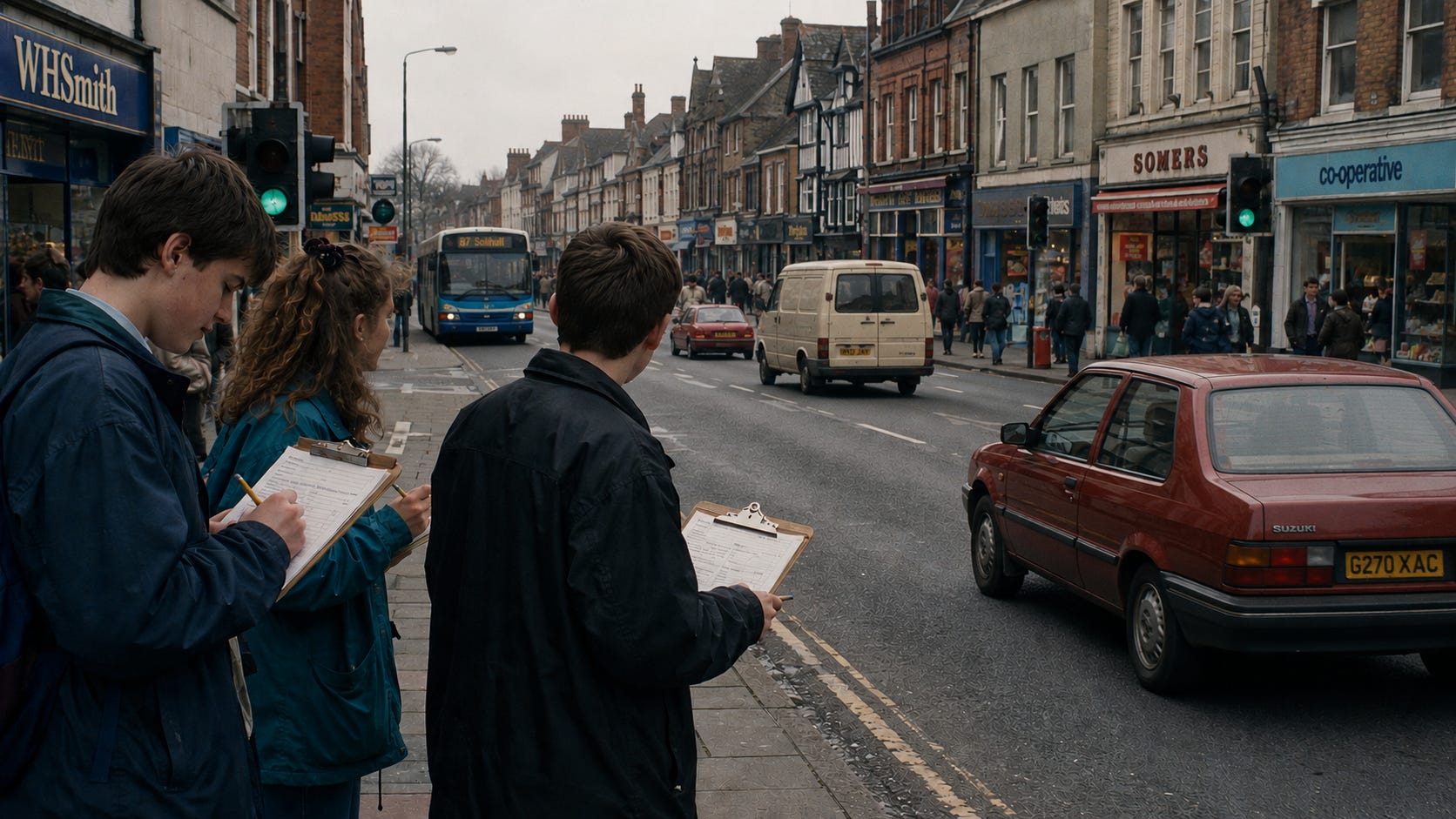
When might this be appropriate? I remember completing a high school geography project in which we counted the cars on different streets. We drew graphs, wrote up a report and so on. Again, I don’t think I learned anything new, but it did involve practising important skills like writing and graphing. It also broke up the usual school routine and I firmly believe there is merit in that. So, it was probably a net benefit, even if it did not involve learning much geography.
Where we can rule it out
In contrast, there are areas where inquiry learning clearly provides no net benefit. The fact that inquiry makes more sense for relative experts is a key insight. Used early in a learning process as a tool to teach foundational knowledge and skills it acts as a centrifuge: those with high prior knowledge may benefit but those with low prior knowledge will not.
Using inquiry learning as the primary method for teaching early literacy is therefore inequitable. Early literacy is probably the most heavily researched area of teaching and there is ample evidence that structured, explicit approaches are more effective than the alternatives.
Early mathematics teaching is less well researched than early literacy, but it would be strange if the cognitive architecture we use to make meaning from numbers is vastly different to that of the cognitive architecture we use to make meaning from letters. The evidence available strongly suggests explicit approaches are superior for students who are struggling with mathematics and there is, of course, a similarity between students who are struggling with mathematics and novice learners generally.
In my view, it is therefore both appropriate and defensible to describe the use of inquiry learning to teach foundational literacy and numeracy as educational malpractice.
Stoking the flames
Perhaps I am technically correct to use the word ‘malpractice’, but at the same time, it is poor politics. Won’t teachers be offended?
I think our first duty is to the truth as we see it. Yes, people will be offended, but I don’t see any way out of that. We could hedge and fudge but the message would not land. Hinting at things is an extraordinarily ineffective communication strategy. Politicians, in particular, are not usually education experts and yet are tasked with making critical education policy decisions. We need to speak clearly and plainly.
So let us call it as it is.
Speaking from long experience, I can say that various forms of inquiry can be very useful and appropriate when designing - co-curricular - extension programs for very bright, highly able students. I’m thinking of philosophy seminars, linguistic arts colloquia, high level academic mentoring programs, preparation for Olympiads - Ethics, IOL etc etc. That being said, these students have as a basis the most solid / advanced subject knowledge and advanced motivation. Even so, the classroom does not always meet their need for cognition, or love of learning beyond the syllabus in the company of like minds.
Your discussion of explicit instruction and direct instruction is interesting. Engelmann and Carine might say that direct instruction is the purest form of explicit instruction. Explicit instruction with problem learners, when done correctly, is effective. There is no guarantee that just telling, modeling, guided practice, independent practice, and testing will produce long-lasting learning. It takes a skilled teacher to understand the perturbations in a student's logic and problem-solving processes. Scripted lessons are someone's idea about what should be said and asked of a generalized student. It is a generalized instruction for a generalized student. It generally works.
The research yields a pattern of highly trained teachers who are given autonomy and resources to meet high expectations. That highly trained teacher is a master of both explicit instruction and inquiry methods. Trailing teachers was a major factor in the "Mississippi Miracle." Teachers who are at a high level of problem-solving development according to Michael Commons Model Hierarchy of Complexity.